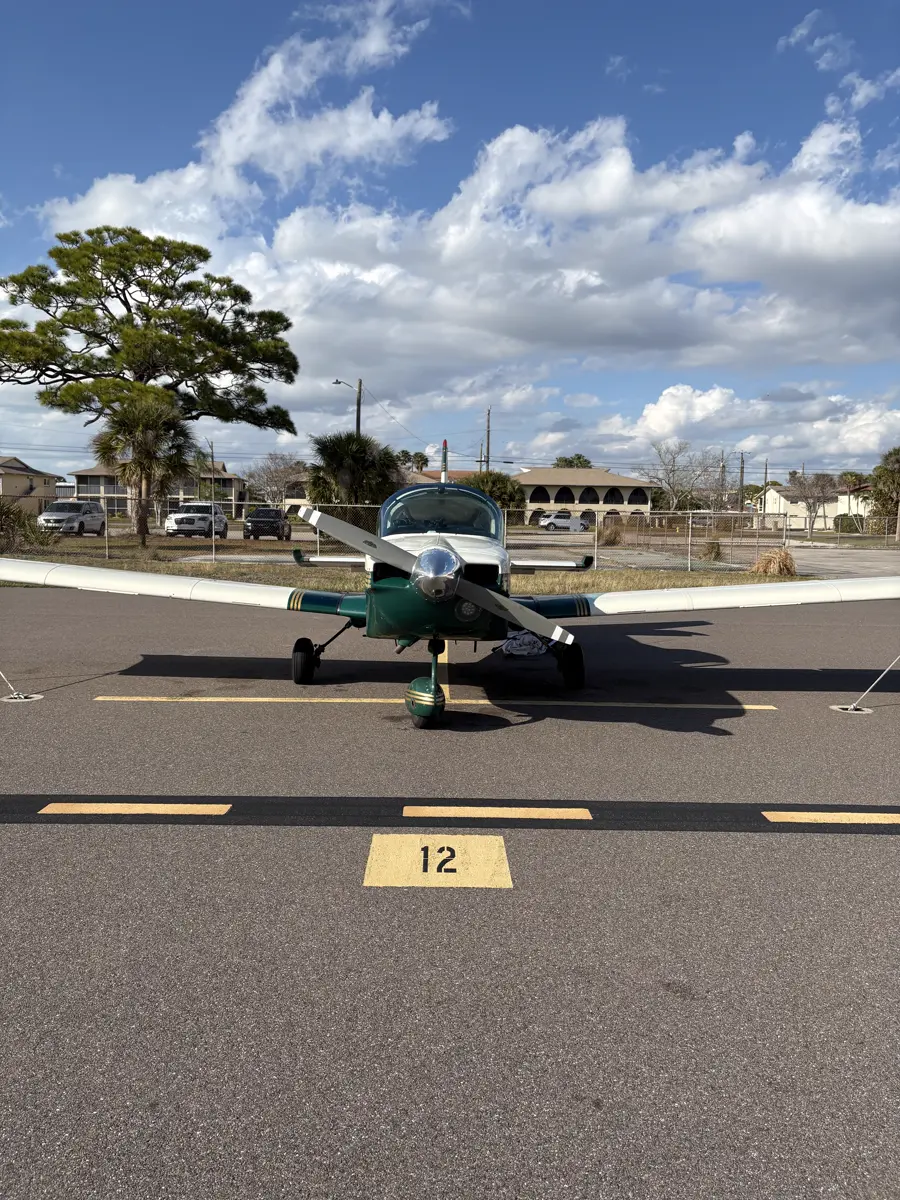
In the fleet · Four-seat trainer
Grumman AA-5B Tiger
- Power
- Lycoming O-360 · 180 HP
- Cruise
- ~138 KTAS
- Seats
- 4
Sliding canopy, low-wing visibility, room for four. A solid, honest airplane to learn in and to travel in once you have your certificate.
Private Pilot License · KVNC Venice FL
A private pilot license is the certificate most people mean when they say they want to learn to fly. Once you pass the checkride you can carry passengers and travel the country in visual conditions, day or night. Here you earn it with one dedicated CFI who stays with you the whole way, in a fleet kept up by our own A&P shop.
The certificate
The Private Pilot License, or PPL, is the foundation every other rating is built on. It lets you act as pilot in command, carry passengers, and fly cross-country in visual conditions, day or night, on your own schedule.
Once you hold a private pilot license you can act as pilot in command of a single-engine airplane, carry passengers, and fly across the country in visual conditions, day or night. You set the schedule. No airline counter, no security line, no waiting on anyone else's timetable.
With one in your logbook you can:
You cannot fly for hire on a private certificate. Getting paid to fly comes later, with the commercial rating you can read about on our flight training programs page. What the private pilot license gives you is the freedom to use an airplane the way most owners and renters actually do: to go somewhere real, and to keep your skills sharp getting there. Around Venice, the view is part of the deal. The Gulf of America is out the left window on almost every flight.
Before you start
The FAA sets the bar for the PPL, and it is a reasonable one. Here is what you need, in plain language.
You must be at least 17 to earn the certificate. You can start lessons earlier and solo at 16, so plenty of students begin before their seventeenth birthday.
You need an FAA Class 3 (Third Class) Medical Certificate from an Aviation Medical Examiner before you solo. We help you schedule with a local AME.
You must be able to read, speak, write, and understand English, the language of aviation radio across the country.
You pass the FAA private pilot written knowledge test. Our ground school, classroom and in-aircraft, gets you ready for it.
You pass a checkride with an FAA examiner: an oral exam on the ground and a flight test in the airplane.
You do not need any prior flying. Most students start with a $199 discovery flight and step into the syllabus the next week.
The medical is the one requirement people worry about most, so read the official rules rather than guess. The FAA explains the classes of medical certificate and how to find an examiner on its medical certification page. If you have a health question, the honest move is to talk to an AME before you spend a dollar on training. We can point you to one nearby.
Hours and timeline
Honest numbers beat optimistic ones. Here is the range most students land in, and the one thing that moves it the most.
40
FAA minimum flight hours
60-70
National average hours
4-9
Months, typical
17+
Minimum age to certify
The FAA minimum for the PPL is 40 flight hours. Almost nobody finishes at the minimum. The honest national average is closer to 60 to 70 hours, and that is the range most of our students land in. How fast you get there depends mostly on how often you fly.
Students who fly twice a week tend to finish in four to nine months. Students who fly once a month take longer and spend more, because every lesson starts with re-learning what faded since the last one. The single biggest thing you control is your schedule. Fly often, and you spend less time relearning the last lesson.
Florida helps. The Gulf Coast gives us long flying weather and calm morning air, so lessons cancel for weather less often here than in most of the country. More flyable days means fewer gaps, and you reach your checkride sooner. For the whole ladder from discovery flight up to CFI, see our training programs. The FAA's own become a pilot pages and AOPA's learn-to-fly resources are good plain-English primers while you decide.
The trainers
You learn in real, well-kept airplanes from your very first lesson, and every one of them is maintained in-house by our own A&P shop next door, by the same team that teaches you to fly them.
In the fleet · Four-seat trainer
Sliding canopy, low-wing visibility, room for four. A solid, honest airplane to learn in and to travel in once you have your certificate.
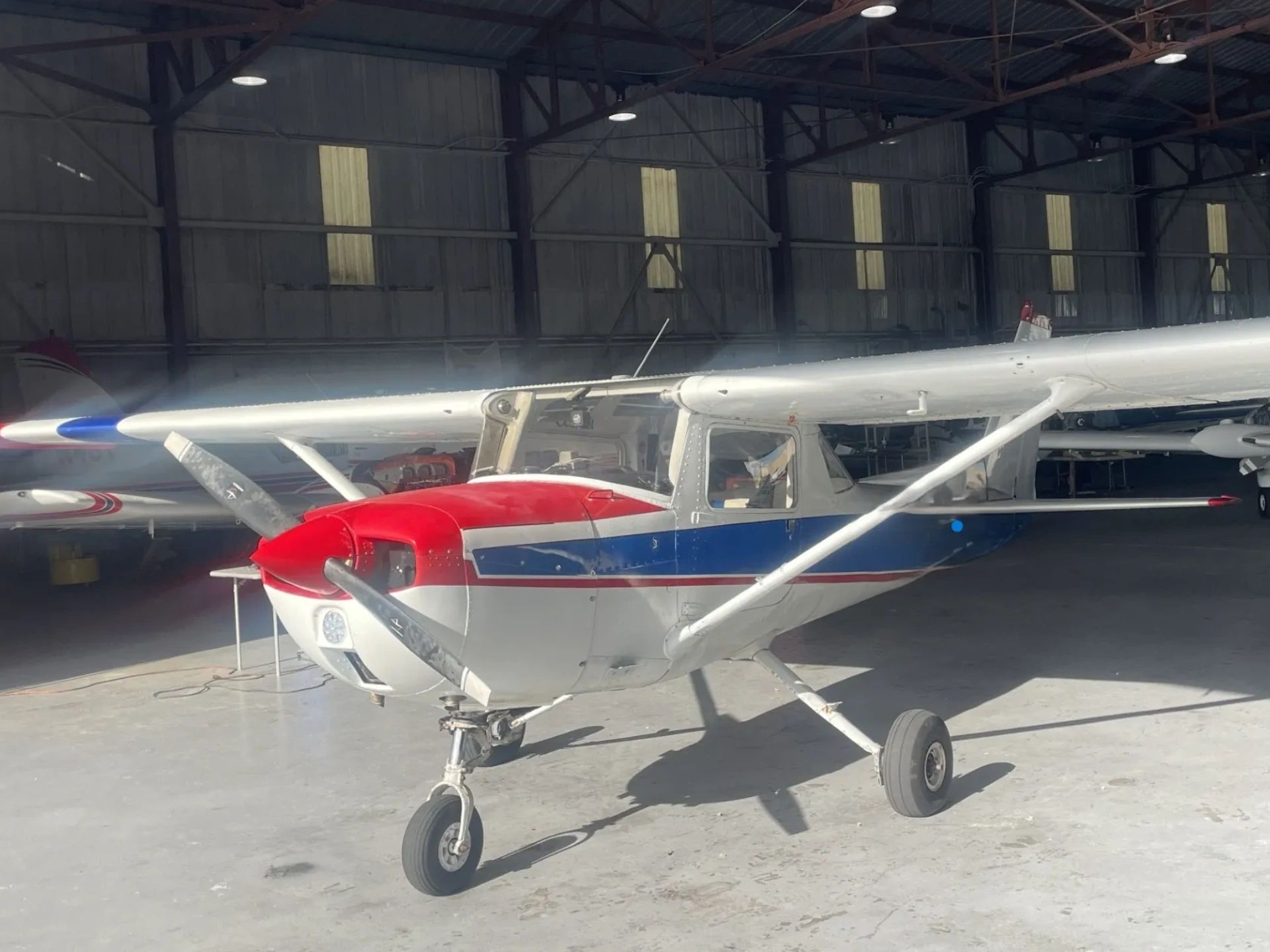
In the fleet · Two-seat trainer
Two seats, simple systems, forgiving manners. Honest, affordable hours toward your total, and the kind of airplane pilots remember their first solo in.
Why train here
Plenty of schools can hand you a certificate. Three things make training here different at our Venice flight school.
The same dedicated CFI stays with you from your first lesson through your checkride, so nobody re-teaches you what your last instructor already covered. Your instructor knows where you are strong and where you need another lap around the pattern.
Our own A&P mechanics keep every airplane airworthy in the hangar next door. When you fly here, the people who teach you and the people who look after the airplane are on the same team, in the same building, so a squawk gets caught early instead of turning into a down day.
Venice Municipal sits with the Gulf to the north and the Intracoastal to the east. You practice over open water and quiet fields in calm, uncrowded airspace. Most people vacation on this coast. You get to train on it.
Cost
The cleanest, cheapest way to begin a private pilot license is to go fly one and see how it feels.
The $199 discovery flight gets you about ninety minutes total: a fifteen-minute briefing, thirty minutes with your hands on the controls over the Gulf, and a debrief. You leave with your first logbook entry, written by a CFI, that counts toward your certificate. It is the honest way to find out whether flying is for you before you commit to the rest of the training.
Total cost for the license depends on how many hours you need, and that depends on how often you fly. Because of that, we do not post one headline number that would be wrong for half the people who read it. For current block and hourly rates, call (941) 375-9727 and we will walk you through real numbers for your schedule. If you would rather write, our contact page and the form below both reach us. No sales pitch, just straight answers.
Frequently Asked
The questions we hear most about PPL training. If yours is not here, call (941) 375-9727 and we will answer it on the spot.
The FAA minimum is 40 flight hours, but almost nobody finishes at the minimum. The national average is closer to 60 to 70 hours. Most students at our Venice, Florida flight school finish in four to nine months, and how fast you get there depends mostly on how often you fly. Twice a week beats once a month by a wide margin.
The total depends on how many hours you need, which depends on how often you fly, so a single headline number would be wrong for half the people who read it. The cleanest way to start is the $199 discovery flight. For current block and hourly rates, call (941) 375-9727 and we will give you real numbers for your schedule.
Yes. For a private pilot license you need an FAA Class 3 (Third Class) Medical Certificate from an Aviation Medical Examiner before you solo. We help you schedule that appointment with a local AME so it does not hold up your training. If a driver's license path sounds better, ask us about Sport Pilot.
You must be at least 17 years old to earn the private pilot certificate. You can start lessons earlier and solo at 16, so many students begin well before their seventeenth birthday. You also need to read, speak, write, and understand English, the language of aviation radio.
No prior flying experience is required. Most students begin with a $199 discovery flight, then step into the private pilot syllabus the following week. You train in a real, well-maintained airplane from your very first lesson. If you want to map out the whole path first, our training programs page lays it out.