Fare
$199
Includes airplane, CFI, fuel, briefing, logbook entry.
The $199 Discovery Flight · KVNC
Ninety minutes from now you'll know whether flying is your thing. Left seat in a well-maintained airplane, a CFI in the right seat walking you through takeoff. You fly the airplane out over the Venice coast, then back to KVNC. For $199 you get the airplane, a CFI, fuel, and a logged hour in your book, whether or not you keep going.
Fare
$199
Includes airplane, CFI, fuel, briefing, logbook entry.
The flight, minute by minute
An hour and a half from when you park your car to when you walk out a logged hour into your first day of training. Here is what each piece actually feels like.
Park, meet your CFI in the hangar, hand over a driver's license and any logbook you already keep. The CFI confirms the airplane and your assigned slot.
Inside, your CFI walks you through what to expect. Yokes, rudder pedals, throttle, trim, what each one does. How to talk on the intercom. What "your airplane" and "my airplane" mean. Twenty minutes max.
Out on the ramp. You see the airplane up close, follow the CFI as they walk you through the pre-flight inspection. Check the oil, the fuel, the control surfaces. You climb into the left seat.
The CFI handles startup, the radio, and the taxi to the runway. Engine run-up, takeoff clearance, throttle in, and you are airborne. Climb out over the Gulf coast at about 80 knots.
At about 2,000 feet the CFI says "your airplane" and you have the controls. Hold the heading. Make a gentle turn left. A gentle turn right. Trim it for cruise. The CFI talks you through every input. You are flying.
Casey Key, Manasota Key, the line of beaches stretching south. You hold the airplane steady while the CFI points out landmarks. This is the part everyone remembers.
The CFI takes the controls back, sets up the approach, and lands at KVNC. Taxi back to the hangar, engine shutdown, doors open.
Back in the hangar. The CFI writes your first logged flight time. You ask anything you want. Most people walk out scheduling lesson two. Some leave thinking about it. Both are fine.
Controls you will actually use
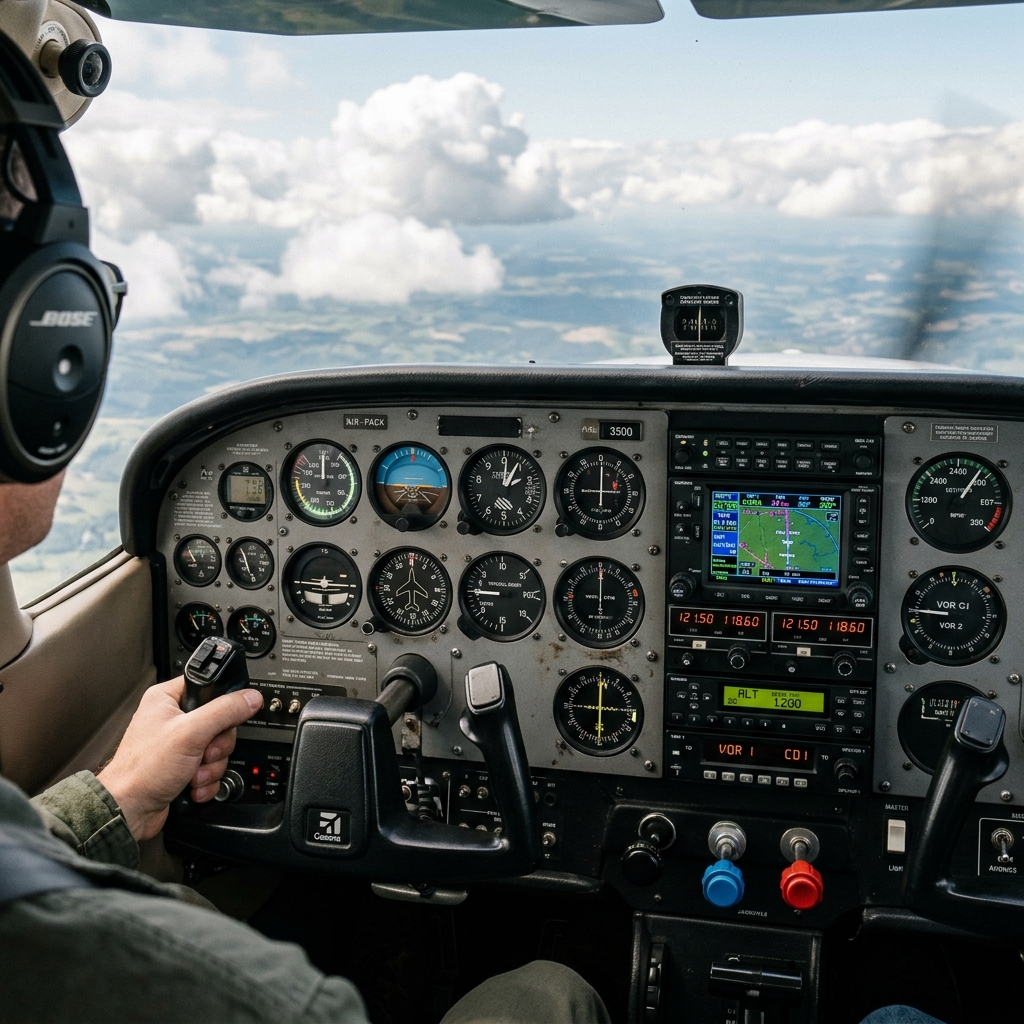
The pilot's job on a discovery flight is just these four things. Everything else the CFI handles. By the time you land you'll have touched all four and know what each one does. Airspeed tells you how fast the airplane is moving through the air, altitude tells you how high you are above sea level, heading tells you what direction the nose is pointed, and attitude tells you whether the wings are level. Four numbers, four small inputs, and the airplane does exactly what you tell it. Our trainers are forgiving enough that a first-time pilot can hold all four steady within ten minutes of taking the controls. For most people, that ten minutes is what settles it.
Nobody climbs in already knowing how to fly. The students who make it are the ones who keep showing up, especially on the days it doesn't click. Keep showing up, and you learn to fly.
Our Chief Instructor
Airspeed
Hold ~95 knots
Altitude
Hold 2,000 ft
Heading
Pick a number
Attitude
Wings level
Reserve a slot
Slots are limited daily by weather and aircraft availability. Submit your preferred date and we confirm within one business day. Skip the form and call (941) 375-9727 if you prefer voice. Weather days get rescheduled at no charge, no fee, no questions, just a new date that works for everyone.
We'll confirm your slot within one business day. Want to lock it in now? Call (941) 375-9727.
Discovery is rung one. The programs page walks all six.